Loans 

Credit Card
IndiaLends App is available in


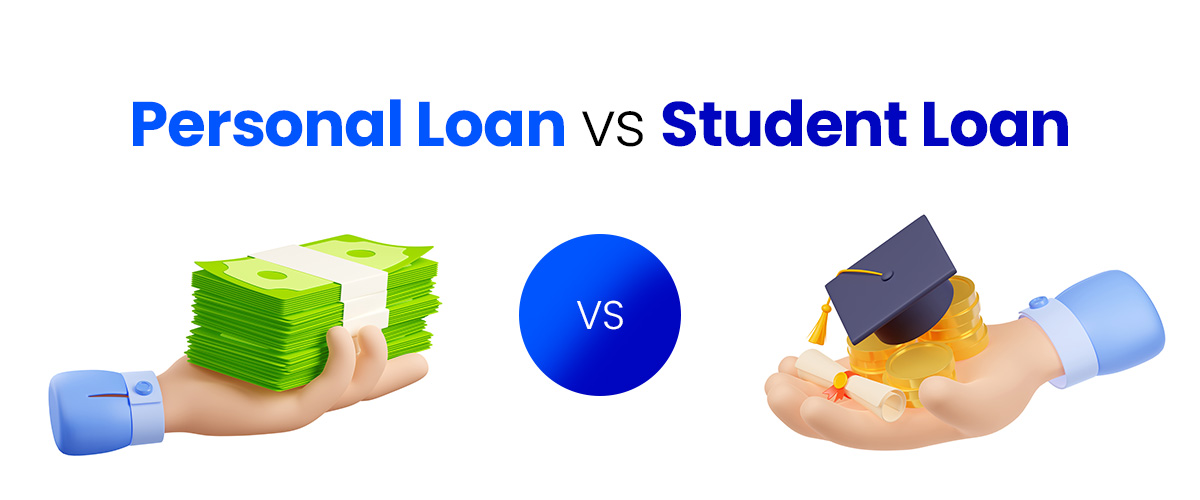
Personal Loan vs Student Loan: Which One Should You Choose in 2025?
Whether you’re planning to fund your higher education or
handle financial emergencies, loans can be a helpful solution. But choosing the
right type of loan is crucial. Many borrowers often get confused between
personal loans and student loans.
In this blog, we’ll break down Personal Loan vs Student
Loan, comparing interest rates, repayment terms, eligibility, and ideal use
cases — so you can make a smart financial decision in 2025.
What is a Personal Loan?
A personal loan is an unsecured loan provided
by banks, NBFCs, or digital loan platforms. You can use the funds for any
purpose, such as weddings, travel, medical expenses, or even paying off credit
card bills.
Key Features:
What is a Student Loan?
A student loan, also called an education loan, is a
loan specifically designed for funding higher education in India or abroad. It
covers tuition fees, living costs, books, and other educational expenses.
Key Features:
Personal Loan vs Student Loan: A Comparison Table
|
Feature |
Personal Loan |
Student Loan |
|
Purpose |
Multi-purpose (any use) |
Only for education expenses |
|
Loan Amount |
₹10,000 – ₹50 Lakh |
₹50,000 – ₹1 Crore |
|
Interest Rate (p.a.) |
10.25% – 24% |
8.50% – 13% |
|
Repayment Start |
Immediately after disbursal |
After course completion + grace period |
|
Tenure |
Up to 5 years |
Up to 15 years |
|
Collateral |
Not required |
Required for higher loan amounts |
|
Tax Benefits |
Not available |
Available under Section 80E |
|
Co-borrower Requirement |
Not mandatory |
Required (usually a parent or guardian) |
When Should You Choose a Personal Loan?
A personal loan is a suitable choice if:
Common Use Cases:
When Should You Choose a Student Loan?
A student loan is the right choice if:
Especially Useful For:
Real-Life Example
Student Loan Example:
Rohit wants to study an MS in the USA. He takes a student loan of ₹35 lakh at
10% interest for 10 years. His repayment begins 6 months after course
completion.
Personal Loan Example:
Priya needs ₹5 lakh for a medical emergency. She takes a personal loan at 13%
interest for 3 years and starts repaying the next month.
Useful Resources and Backlinks
Final Verdict: Which is Better?
|
For Higher Studies? |
Student
Loan |
|
For Emergency Funds? |
Personal Loan |
Each loan serves a different purpose. Choose based on your
financial goal, repayment capacity, and urgency of funds.
Conclusion
If you’re pursuing education, a student loan offers more
benefits like lower interest rates, tax deductions, and repayment flexibility.
But if you need money fast and don’t want documentation hassles, a personal
loan is your best bet.
Frequently Asked Questions (FAQs)
Can I use a personal loan for education?
Yes, but you won’t receive tax benefits or repayment flexibility like a student
loan provides.
Which is cheaper, a student loan or a personal loan?
Student loans are usually cheaper due to lower interest rates and longer
repayment tenure.
Can a student get a personal loan?
Most lenders prefer salaried individuals. However, some NBFCs and digital
lenders may offer small loans to students with side income.

Scan this QR Code


Latest Articles
RBI Cooling-Off Period on Personal Loans: What You Can Actually Undo
18 Sep 2026
Should You Take a Personal Loan During Your Notice Period?
18 Sep 2026
Gold Loan for Business Working Capital: Cheaper Than a Business Loan?
11 Sep 2026
Gold Coin vs Jewellery Loan: What Lenders Will and Won't Accept
11 Sep 2026
Online Gold Loan vs NBFC Branch: Rate, Purity Test & Vault Safety
11 Sep 2026
Relevant Articles
How to Reduce Personal Loan EMI Quickly
29 Aug 2025
Credit Card Annual Fee Waiver Tricks
29 Aug 2025
Latest RBI Rules for Personal Loans 2025
29 Aug 2025
How to Get a Personal Loan with a Low CIBIL Score – A Complete Guide by IndiaLends
24 Jul 2025
Things You Didn’t Know Affect Your Credit Score
25 Jun 2025
FAQ’s
Loan against mutual funds (LAMF) allows you to borrow cash against your mutual fund investments as collateral. You can use Volt Money to lien mark your mutual funds digitally to avail an instant limit without losing the ownership of your mutual funds and all the associated benefits with it. Funds will be made available in the form of an overdraft facility.
The annual fee for the Axis Privilege Card is typically Rs. 1,500 plus taxes. This fee can be waived if the cardholder achieves an annual spending milestone, though the exact spending amount for the waiver can vary by card variant. For example, a common waiver condition is spending above Rs. 2.5 lakh in an anniversary year.
Luxe Vouchers are digital gift cards that can be redeemed across popular luxury and lifestyle brands such as Myntra, Flipkart, Pantaloons, and more. Once you qualify for the offer, the voucher code will be sent directly to your registered email ID or mobile number. In most cases, vouchers are delivered within 5–7 working days after successful validation of your transaction or application.
Yes, you can apply even with a low CIBIL score, but your chances of approval may be limited. Most banks and lenders prefer a CIBIL score of 750 or above for quick approval and better interest rates. If your score is lower, some lenders may still consider your application based on other factors such as your income, employment stability, or existing relationship with the bank. However, you may be offered a lower loan amount or higher interest rate. Improving your credit score before applying can increase your chances of getting approved on favorable terms.
 URL copied to clipboard successfully !
Download the IndiaLends App Now
Scan this QR code to download the app