Credit Card 
IndiaLends App is available in


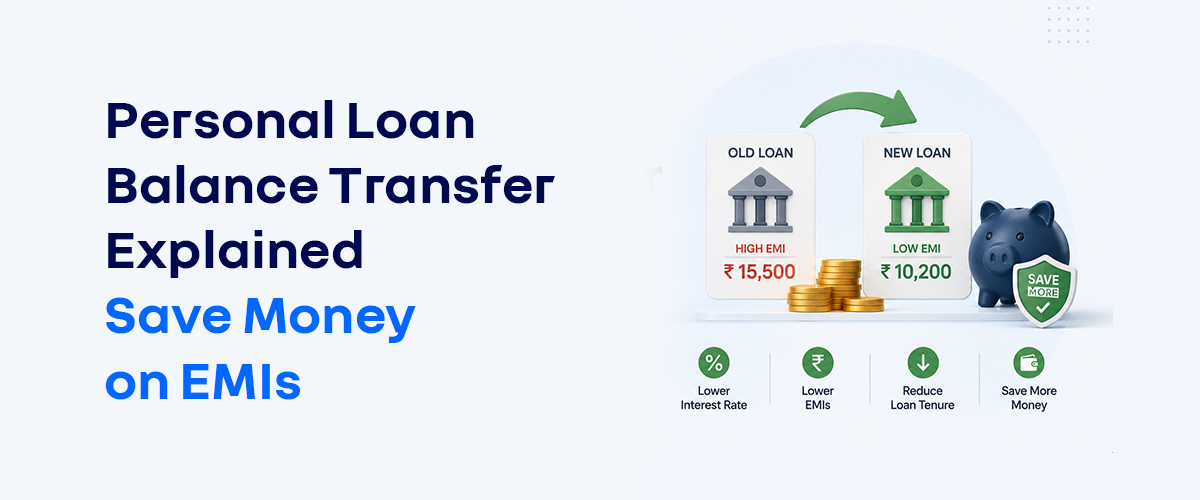
Personal Loan Balance Transfer Explained
If you took a personal loan a while ago and your credit profile has improved since then, there's a good chance you're paying a higher interest rate than what you could qualify for today. This is exactly the gap that a personal loan balance transfer is designed to close.
Let's understand how it works and when it actually makes financial sense.
What is a Personal Loan Balance Transfer?
A personal loan balance transfer is the process of transferring your existing personal loan's outstanding balance to a new lender, typically to benefit from a lower interest rate, better terms, or improved service. The new lender pays off your existing loan, and you continue repayment under the new terms.
Why Do Borrowers Opt for a Balance Transfer?
How Personal Loan Balance Transfer Works: Step-by-Step
When Does a Balance Transfer Make Sense?
| Scenario | Balance Transfer Worth Considering? |
|---|---|
| Significant interest rate difference available | Yes |
| Long remaining tenure on existing loan | Yes, more savings potential |
| Very short remaining tenure | Maybe not, savings may not offset costs |
| High foreclosure/processing charges | Needs careful cost-benefit calculation |
| Improved CIBIL score since original loan | Yes, likely to qualify for better rate |
Example: Calculating Potential Savings
Suppose Neha took a personal loan of ₹5,00,000 two years ago. Her CIBIL score has since improved significantly due to consistent, on-time repayments. She now finds a lender offering a meaningfully lower interest rate for a balance transfer.
Before proceeding, she calculates the following:
| Cost/Benefit Factor | Consideration |
|---|---|
| Interest savings from lower rate | Calculated over remaining tenure |
| Foreclosure charge from current lender | Deducted from potential savings |
| Processing fee from new lender | Deducted from potential savings |
| Net savings | Interest savings minus total switching costs |
Only if the net savings are meaningfully positive does the balance transfer make financial sense for her.
Costs Involved in a Balance Transfer
Always calculate the net benefit after accounting for these costs — a balance transfer only makes sense if the interest savings clearly outweigh the switching costs.
Balance Transfer vs Continuing with Existing Loan
| Factor | Balance Transfer | Continue Existing Loan |
|---|---|---|
| Interest Rate | Potentially lower | Remains the same |
| Switching Costs | Foreclosure + processing fees | None |
| Effort Involved | New application process | No action needed |
| Best For | Significant rate difference, long remaining tenure | Minimal rate difference, short remaining tenure |
Common Mistakes to Avoid
Expert Tips for a Smart Balance Transfer
Check Your Personal Loan Balance Transfer Eligibility
Conclusion
A personal loan balance transfer can be a smart financial move when the interest rate difference is meaningful and the remaining tenure is long enough to generate real savings. But it's not automatically beneficial — a careful cost-benefit calculation is essential before making the switch. Check your eligibility and explore personal loan offers on IndiaLends.

Scan this QR Code


Latest Articles
Documents Required for Personal Loan in India
15 Jul 2026
How to Improve Your Personal Loan Approval Chances
15 Jul 2026
Why Personal Loan Applications Get Rejected in India
14 Jul 2026
How to Improve Your Credit Score Fast in India
13 Jul 2026
Best Credit Cards for Cashback in India 2026
13 Jul 2026
Relevant Articles
Documents Required for Personal Loan in India
15 Jul 2026
How to Improve Your Personal Loan Approval Chances
15 Jul 2026
Why Personal Loan Applications Get Rejected in India
14 Jul 2026
Gold Loan vs Personal Loan, Which is Cheaper
10 Jul 2026
Best Personal Loan Interest Rates Today India
10 Jul 2026
FAQ’s
It's the process of moving your existing personal loan's outstanding balance to a new lender, usually to benefit from a lower interest rate or better terms.
Not always. Savings depend on the interest rate difference, remaining tenure, and the total switching costs like foreclosure and processing fees.
Yes, some lenders offer a top-up loan along with the balance transfer, providing extra funds beyond your existing outstanding balance.
Common charges include foreclosure/prepayment charges from your existing lender and processing fees from the new lender.
Usually not, since the potential interest savings over a short remaining period may not offset the switching costs involved.
 URL copied to clipboard successfully !
Download the IndiaLends App Now
Scan this QR code to download the app