Credit Card 
IndiaLends App is available in


Why Loan Applications Get Rejected
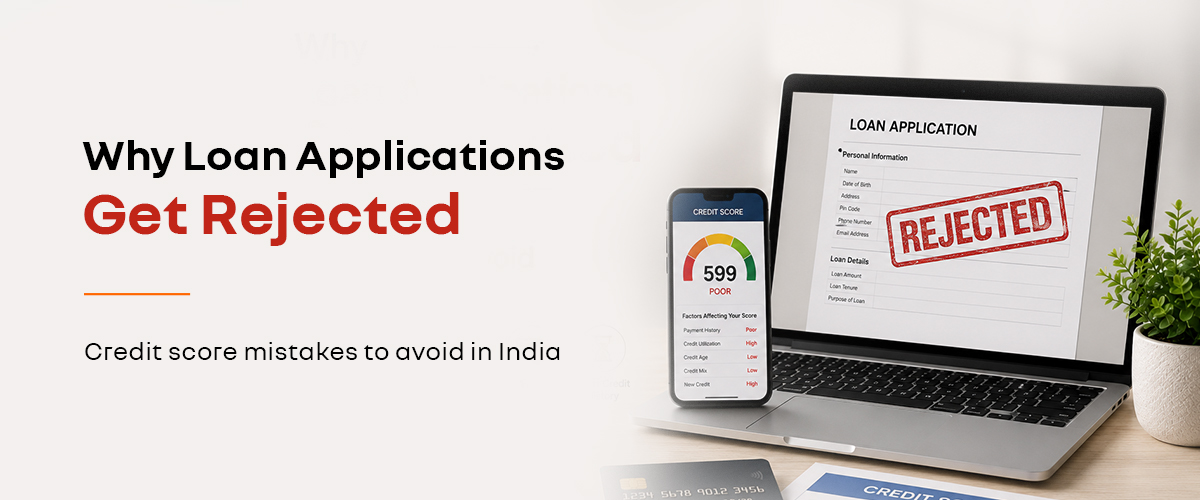
Getting a loan application rejected can be frustrating. It may also create a hard inquiry on your CIBIL report, which can make future applications harder if you apply repeatedly without fixing the underlying issue.
Many loan rejections in India are preventable. The most common reasons are related to CIBIL score, repayment history, high existing debt, credit report errors, or incomplete documentation.
Top Reasons Loan Applications Are Rejected in India
1. Low CIBIL Score
A low CIBIL score is one of the most common reasons for loan rejection. Most banks prefer a score of 700 to 750 for personal loans and 750 or above for stronger approval chances.
2. History of Missed or Late Payments
Late EMI payments, credit card defaults, and Days Past Due entries can make lenders view your profile as risky, even if your current income is stable.
3. High Debt-to-Income Ratio
If your existing EMIs already consume a large portion of your monthly income, lenders may reject your application because they believe you are over-leveraged.
For example, if your salary is Rs. 60,000 and existing EMIs are Rs. 30,000, adding another EMI may push your debt burden too high for approval.
4. Loan Settlement on CIBIL Report
If a previous loan was marked as Settled instead of Closed, lenders may see it as a negative sign because it means the full outstanding amount was not repaid.
5. Multiple Loan Applications in a Short Period
Applying to several lenders at once creates multiple hard inquiries. This can reduce your score and signal credit hunger to lenders.
6. Errors in Your Credit Report
Incorrect late payment entries, duplicate accounts, or loans shown as outstanding even after closure can lead to rejection. Always review your credit report before applying.
7. Unstable Employment History
Frequent job changes, employment gaps, or recent transition to self-employment can make lenders cautious about your repayment ability.
8. Insufficient Income
Every lender has a minimum income requirement. If your income does not meet the lender’s policy or loan amount expectations, your application may be rejected.
9. Too Many Unsecured Loans
Having multiple active personal loans or other unsecured loans can make your profile appear risky, even if you are currently paying on time.
10. Wrong or Incomplete Documentation
Incorrect PAN details, mismatched addresses, missing income proof, or incomplete KYC documents can delay or reject your loan application.
11. Loan Account Reported as Written Off
A Written Off account is a serious negative marker. It means the lender treated the debt as a loss, which can make future loan approvals very difficult.
12. You Are Listed as a Defaulting Guarantor
If you stood as guarantor for someone else’s loan and they defaulted, that negative repayment history may appear on your CIBIL report as well.
What Happens to Your CIBIL Score After Loan Rejection?
The rejection itself is not directly reported to CIBIL. However, the hard inquiry made by the lender remains on your report. Multiple inquiries in a short period can reduce your score and make lenders cautious.
Red Flags That Lenders Check Immediately
Pre-Application Checklist to Avoid Loan Rejection
Check Your Credit Score Before Your Next Loan Application
Knowing your score before applying can help you avoid unnecessary rejection and choose the right lender with more confidence.
Check Your Free CIBIL Score Now
Conclusion
Loan rejections usually happen because of clear risk signals such as low CIBIL score, late payments, high debt burden, unsettled accounts, or documentation gaps. By checking your credit report and preparing before applying, you can reduce rejection risk and improve your chances of approval.

Scan this QR Code


Latest Articles
How to Improve Your Credit Score Fast in India
13 Jul 2026
Best Credit Cards for Cashback in India 2026
13 Jul 2026
Gold Loan vs Personal Loan, Which is Cheaper
10 Jul 2026
Best Personal Loan Interest Rates Today India
10 Jul 2026
Common CIBIL Score Myths That Most People Believe
14 May 2026
Relevant Articles
How to Improve Your Credit Score Fast in India
13 Jul 2026
Common CIBIL Score Myths That Most People Believe
14 May 2026
How Long Does It Take to Improve a CIBIL Score?
14 May 2026
CIBIL vs Experian vs Equifax vs CRIF
13 May 2026
How to Check Your CIBIL Score for Free in India
13 May 2026
FAQ’s
A good income alone does not guarantee approval. Lenders also check your CIBIL score, repayment history, existing EMIs, debt-to-income ratio, employment stability, and credit report red flags.
The rejection itself does not directly affect your CIBIL score. However, the hard inquiry made during the loan application stays on your report and can have a temporary impact, especially if there are multiple inquiries.
First, ask the lender for the reason for rejection. Then check your credit report, fix the issue, avoid applying again immediately, and wait at least 3 to 6 months before reapplying.
Yes. Even with a strong CIBIL score, lenders may reject your application if your income is insufficient, debt-to-income ratio is high, documentation is incomplete, or employment profile does not meet their policy.
Check your CIBIL score before applying, review your credit report for errors, keep EMIs within manageable limits, avoid multiple applications, and apply only to lenders whose eligibility criteria match your profile.
 URL copied to clipboard successfully !
Download the IndiaLends App Now
Scan this QR code to download the app