Loans 

Credit Card
IndiaLends App is available in


Credit Score for First-Time Borrowers: How to Build Credit Without Taking Unnecessary Loans
You've just started earning. No loans, no credit cards, no missed payments, but also, no credit score. It feels like a strange catch-22: banks want to see credit history before lending, but you can't build credit history without first getting some form of credit. If you've ever wondered how to get a credit score for a first-time borrower without taking a loan you don't actually need, you're not alone.
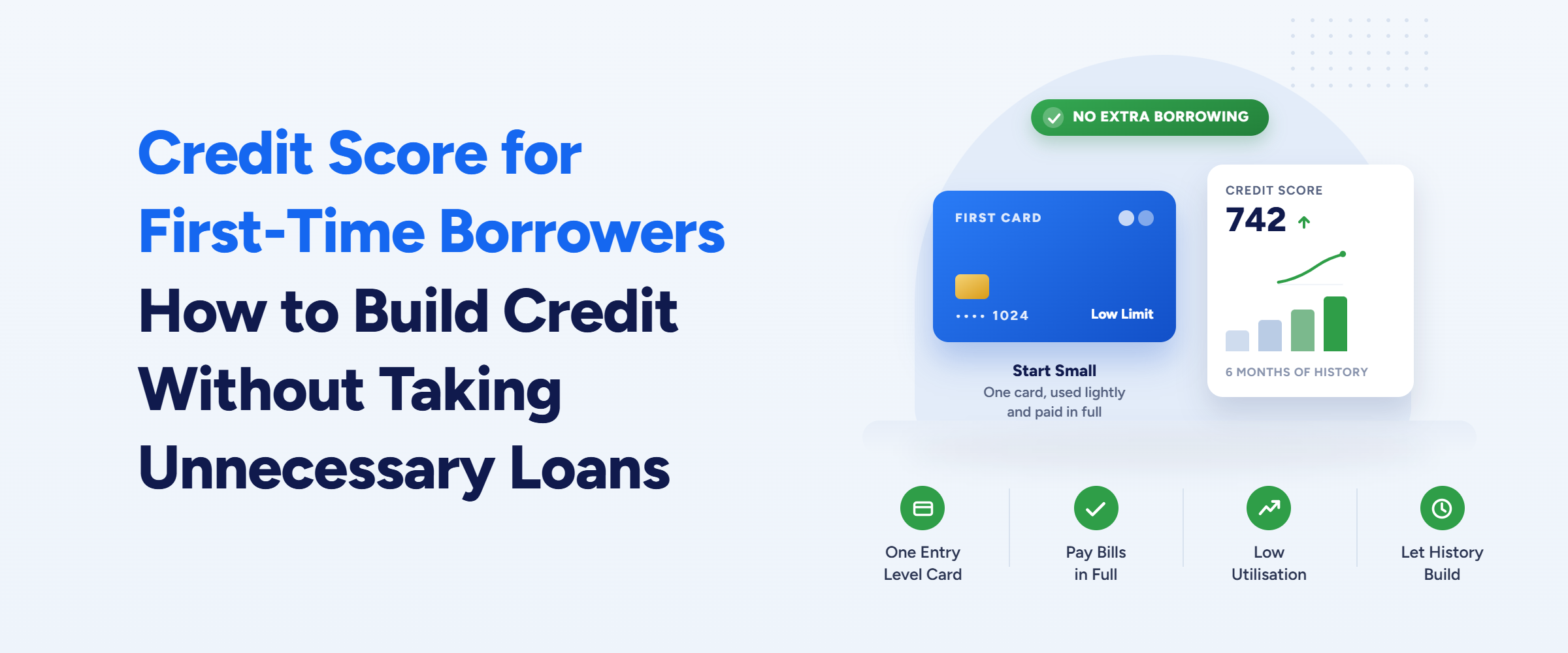
The good news is that building credit doesn't require a large loan or unnecessary debt. This guide walks you through practical, low-risk ways to build a healthy CIBIL profile from scratch.
What Does It Mean to Have "No Credit History"?
If you've never taken a loan or used a credit card, credit bureaus like CIBIL simply have no data on you. This usually shows up as a "No History" (NH) or "-1" score on your credit report, rather than a low score.
This is different from having a bad credit score. A "No History" status isn't a red flag, it just means lenders have nothing to evaluate yet, which can still make loan approval trickier since there's no repayment behaviour to assess.
Core Concepts First-Time Borrowers Should Understand
Practical Ways to Build Credit Without Taking Unnecessary Loans
What NOT to Do: Avoiding Unnecessary Debt
| Temptation | Why to Avoid It |
|---|---|
| Taking a personal loan you don't need, just to "build credit" | Adds real debt and interest cost for no genuine purpose |
| Applying for multiple credit cards at once | Multiple hard inquiries can temporarily lower your score |
| Maxing out a starter credit card | Hurts your credit utilisation ratio right from the start |
| Taking a large loan amount "to be safe" | Increases EMI burden and risk without improving score faster |
| Borrowing from informal or unregulated lenders | Doesn't get reported to credit bureaus at all, doesn't help build your score |
Step-by-Step: Building Your Credit Score from Zero
Worked Example: Building Credit, the Right Way
Example: Ananya, 23, First Job, Pune
Ananya had just started her first job and had no credit history. Instead of taking a personal loan she didn't need, she opened a secured credit card against a ₹20,000 fixed deposit.
She used the card for her monthly grocery and mobile recharge spends around ₹4,000-₹5,000 a month and paid the full bill every time. After 8 months of consistent use, she had a CIBIL score of 720, without ever taking on unnecessary debt.
Common Mistakes First-Time Borrowers Make
Expert Tips for New Borrowers
Ready to Start Your Credit Journey the Right Way?
IndiaLends helps first-time borrowers understand their credit eligibility and explore suitable starter credit products, so you can build your CIBIL score responsibly, without unnecessary debt.
Check Your Free Credit Eligibility Now
Conclusion
Building a credit score as a first-time borrower doesn't require taking on debt you don't need. A secured credit card, a small credit-builder product, or a genuine EMI purchase, combined with consistent and disciplined repayment, is enough to establish a healthy CIBIL profile over time. Start small, stay consistent, and let your credit history build naturally, there's no need to rush it with unnecessary loans.

Scan this QR Code


Latest Articles
How to Read a CIBIL Report Line by Line
20 Aug 2026
CIBIL Report Account Status Codes: Current, Settled, Written Off, and Closed
20 Aug 2026
CIBIL Score After Loan Settlement: What Borrowers Should Know
18 Aug 2026
Why a Closed Loan Still Appears on Your Credit Report
18 Aug 2026
How to Redeem Credit Card Reward Points Before They Expire
17 Aug 2026
Relevant Articles
How to Read a CIBIL Report Line by Line
20 Aug 2026
CIBIL Report Account Status Codes: Current, Settled, Written Off, and Closed
20 Aug 2026
CIBIL Score After Loan Settlement: What Borrowers Should Know
18 Aug 2026
Why a Closed Loan Still Appears on Your Credit Report
18 Aug 2026
How to Improve Your Credit Score Fast in India
13 Jul 2026
FAQ’s
Start with a secured credit card or small credit-builder product, use it for regular expenses, and pay the full bill on time every month. Consistent, responsible use over 6-12 months typically builds a solid initial score.
No. Taking an unnecessary loan just to build credit adds real debt and interest cost. A secured credit card or small, genuine EMI purchase is usually a safer, more practical starting point.
This simply means you have no credit history yet, since you've never taken a loan or credit card. It's different from a low or bad score, lenders just have no data to assess.
It typically takes about 6-12 months of consistent, on-time repayment to start seeing a meaningful, positive score, though a genuinely strong score often takes longer to establish fully.
Yes. Secured credit cards, backed by a fixed deposit, are one of the most accessible ways for first-time borrowers to start building a credit history, since approval doesn't depend on prior credit behaviour.
 URL copied to clipboard successfully !
Download the IndiaLends App Now
Scan this QR code to download the app