Credit Card 
IndiaLends App is available in


Different Types of Loans in India
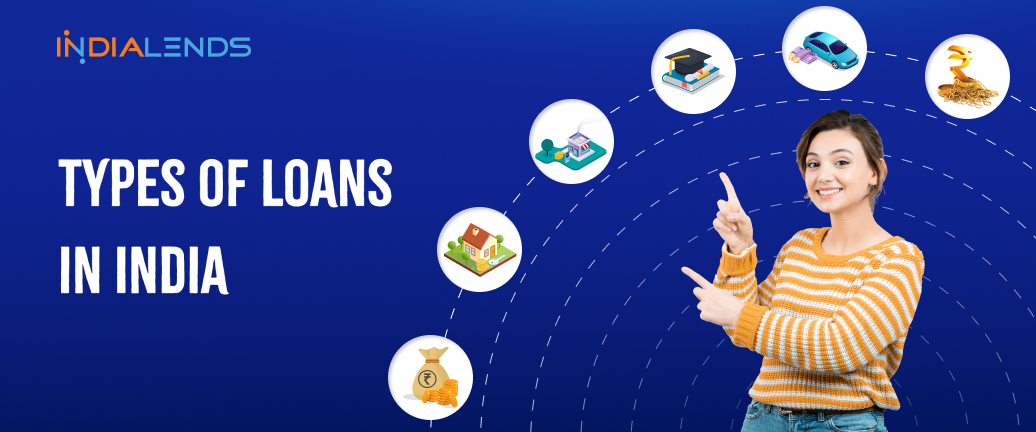
In a country as diverse as India, loans play a crucial role in fulfilling various financial needs, whether it's buying a home, funding education, starting a business, or dealing with unexpected expenses. In this article, we will see the different types of loans available in India. We will explore their unique features, eligibility requirements, and the advantages they bring to borrowers, helping you to make informed decisions on your financial journey.
Secured loans are those where the borrower pledges an asset as collateral or security against the loan amount they receive from a lender. These loans are "secured" because the collateral guarantees that the lender can recover their funds even if the borrower defaults. Here are some key features and aspects of secured loans:
1. Collateral Requirement
3. Higher Loan Amounts
Unsecured loans are those where borrowers are not required to provide collateral or security against the loan amount they receive. These loans are often granted based on the borrower's creditworthiness, financial history, and loan repayment ability.
Personal loans are one of the most known forms of borrowing in India. They are unsecured loans, which means you don't need to provide collateral. These loans are typically used for various purposes, such as wedding expenses, medical emergencies, or travel plans.
1. No collateral is required.
2. Flexible repayment tenures.
3. Fixed or floating interest rates.
4. Quick approval process.
5. Minimal documentation.
(Pro-tip: At IndiaLends, you can compare your loan offers from 70+ RBI-approved Banks & NBFCs.)
Home or housing loans are designed to help individuals purchase their dream homes. Home loans in India often come with long tenures, making it easier for borrowers to repay them over several years. Interest rates on home loans can be fixed or floating, and they may vary based on the lender's policies and the borrower's creditworthiness.
1. Higher loan amounts
2. Longer tenures
3. Tax benefits under Section 80C
4. Fixed or floating interest rates
Education loans are designed to fund higher education expenses in India and abroad. They cover tuition fees, travel costs, and other related expenses. Education loans typically have a grace period during which the borrower only needs to make repayments once the course is completed. This gives students or their parents some financial relief.
1. Covers entire study expenses.
2. Fixed or floating interest rates
3. Tax benefits under 80E
4. Margin money (A certain percentage of money is taken as a down payment)
5. Grace period (for repaying the loan)
Car loans are used to finance the purchase of a new or used car. These loans come with a fixed tenure for repayment. Car loans in India are available from banks, financial institutions, and even car dealerships, making it convenient for individuals to purchase their desired vehicles.
1. Fixed or floating interest rates
2. Comprehensive car insurance
3. 1-7 years tenure
Gold loans have been a traditional form of borrowing in India. Individuals can promise their gold jwellery or ornaments as
collateral to secure these loans. Gold loans are usually short-term and are ideal for immediate financial needs. The interest rates on gold loans are often lower than other loans.
1. Collateral required.
2. Minimal documentation
3. Short-term tenure
4. Security amount needed.
For aspiring entrepreneurs and business owners, business loans are a lifeline. These loans help start a new business, expand an existing one, or meet working capital requirements.
1. Higher loan amounts
2. No collateral needed.
3. Company documents required.
4. Tenure 1 to 5 years.
Did you know? You can also get a Personal Line of Credit.
A personal line of credit is a flexible form of borrowing where lenders approve a credit limit for the borrower. The borrower can withdraw funds as needed and only pay interest on the amount withdrawn. It's a handy financial tool for managing fluctuating expenses or emergencies.
At IndiaLends, we have a Personal Line of Credit for you. Rezerv Cash.
Check your Rezerv Cash eligibility here.

Scan this QR Code


Latest Articles
What is CIBIL Score?
31 Mar 2026
Complete Guide to CIBIL Score in India
30 Mar 2026
Complete Guide to CIBIL Score in India (2026) | Check, Improve & Boost Your Credit Score
20 Mar 2026
Upcoming Sale Calendar 2025 – Which Credit Card to Use & When?
10 Sep 2025
How to Save ?10,000 Extra This Sale With the Right Credit Card
10 Sep 2025
Relevant Articles
How to Reduce Personal Loan EMI Quickly
29 Aug 2025
Credit Card Annual Fee Waiver Tricks
29 Aug 2025
Latest RBI Rules for Personal Loans 2025
29 Aug 2025
How to Get a Personal Loan with a Low CIBIL Score – A Complete Guide by IndiaLends
24 Jul 2025
Things You Didn’t Know Affect Your Credit Score
25 Jun 2025
FAQ’s
Loan against mutual funds (LAMF) allows you to borrow cash against your mutual fund investments as collateral. You can use Volt Money to lien mark your mutual funds digitally to avail an instant limit without losing the ownership of your mutual funds and all the associated benefits with it. Funds will be made available in the form of an overdraft facility.
The annual fee for the Axis Privilege Card is typically Rs. 1,500 plus taxes. This fee can be waived if the cardholder achieves an annual spending milestone, though the exact spending amount for the waiver can vary by card variant. For example, a common waiver condition is spending above Rs. 2.5 lakh in an anniversary year.
Luxe Vouchers are digital gift cards that can be redeemed across popular luxury and lifestyle brands such as Myntra, Flipkart, Pantaloons, and more. Once you qualify for the offer, the voucher code will be sent directly to your registered email ID or mobile number. In most cases, vouchers are delivered within 5–7 working days after successful validation of your transaction or application.
Yes, you can apply even with a low CIBIL score, but your chances of approval may be limited. Most banks and lenders prefer a CIBIL score of 750 or above for quick approval and better interest rates. If your score is lower, some lenders may still consider your application based on other factors such as your income, employment stability, or existing relationship with the bank. However, you may be offered a lower loan amount or higher interest rate. Improving your credit score before applying can increase your chances of getting approved on favorable terms.
 URL copied to clipboard successfully !
Download the IndiaLends App Now
Scan this QR code to download the app